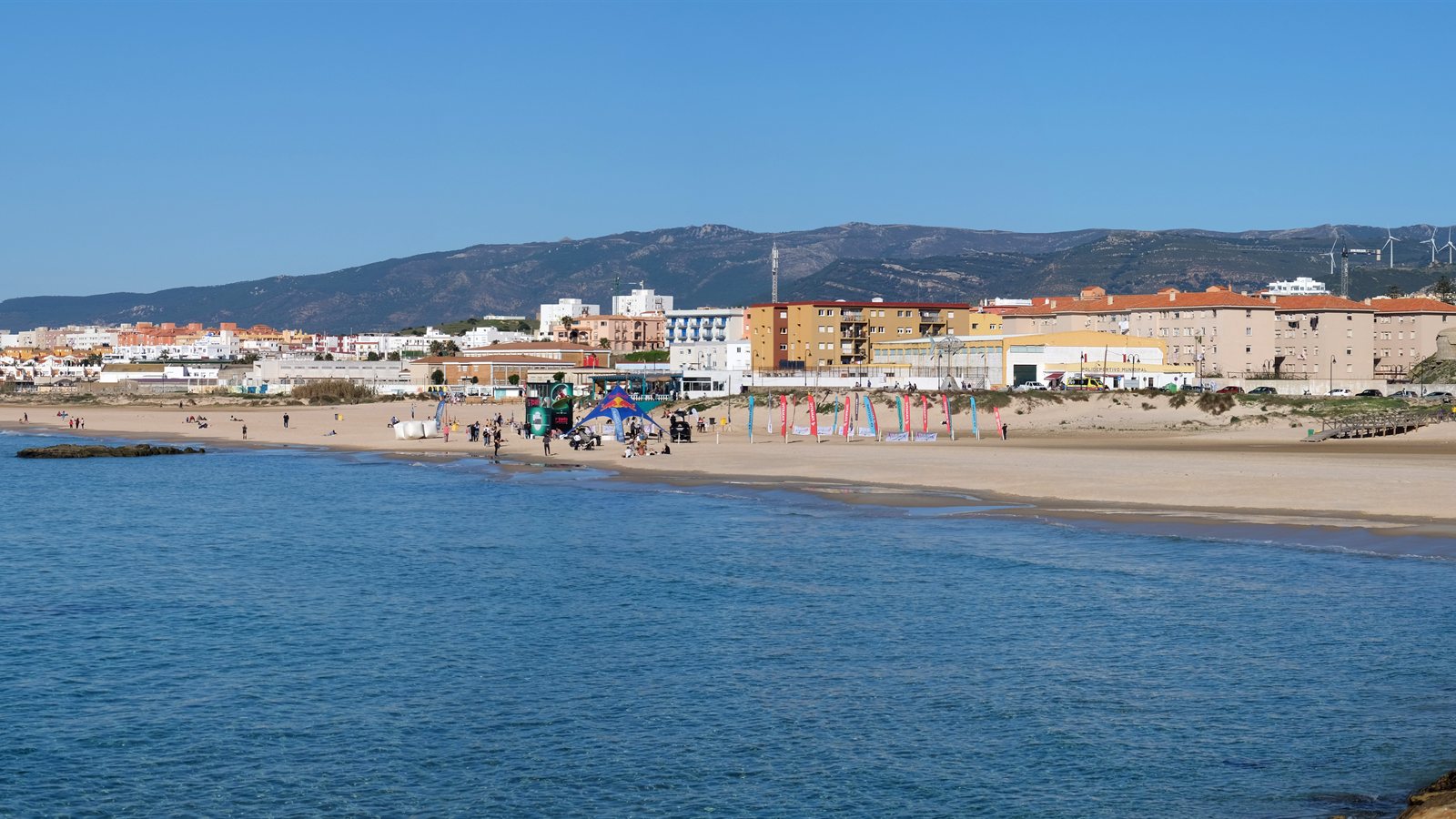
Current punishes sloppy edging immediately, so students learn to hold an upwind line within their first few sessions rather than after a season of drifting downwind on a lagoon. Instructors teach the theory of drift angle, apparent wind and body position from the beginning, and students practise against a fixed transit so progress is measurable rather than felt. Riders who then travel to easier spots describe them as effortless, which is the whole point of learning somewhere demanding under supervision.
With wind against tide the channel stands up into short, steep chop that teaches boat handling and timing; with wind and tide together the same water goes flat and fast and becomes ideal for foiling, transitions and speed. That means a single location can serve a beginner in the morning and an advanced rider in the afternoon of the same day, and students experience both states within a week rather than assuming that every spot behaves like the one they learned on.
Every student wears a helmet with a receiver, so corrections arrive while the mistake is happening rather than afterwards on the beach. It halves the time needed for the first water start, allows an instructor to hold two students safely, and lets a coach talk a nervous rider calmly back upwind instead of watching them drift. It also means a student who is frightened hears a steady voice rather than being alone on the water wondering whether anybody has noticed.
The boat is on the water for the whole session, not tied to the pontoon, positioned below the group so that anything that goes wrong drifts towards help rather than away from it. It carries a driver with a powerboat qualification, spare lines, a knife, a radio, tow gear and warm layers. Sessions are logged with the number of people out and the expected return, and the school holds a direct radio link with the port authority. Tired riders are collected long before they become a problem.
Every morning we publish the wind, the tide and what the two will do to each other, in plain language rather than a screenshot of a model. Bookings are moved when the combination will produce conditions above a student's level, and the reasoning is explained rather than announced. Riders who are not our customers use the same briefing, which we regard as part of running a school on a stretch of water where a bad decision has real consequences.
Kites, boards, foils, rigs, harnesses and impact vests are replaced every second season and maintained in the on-site workshop between sessions: lines measured and replaced, bladders and valves tested, foils checked for play, footstraps and pads renewed. Wetsuits are graded to water temperature, washed properly and sized from small to extra large. Students who are considering buying receive an honest opinion, and since we sell no equipment that opinion costs nothing to give.